

Door hinges are small components with a critical role. Every time a door opens or closes, hinges carry the load, control movement, and maintain alignment. Without properly functioning hinges, even the highest-quality doors would fail to perform efficiently.
For buyers, distributors, and project contractors, understanding how door hinges work is not just technical knowledge—it directly impacts product selection, project durability, and long-term cost efficiency. This guide explains the working mechanism of door hinges, explores different hinge types, compares materials, and provides practical insights for real-world applications.
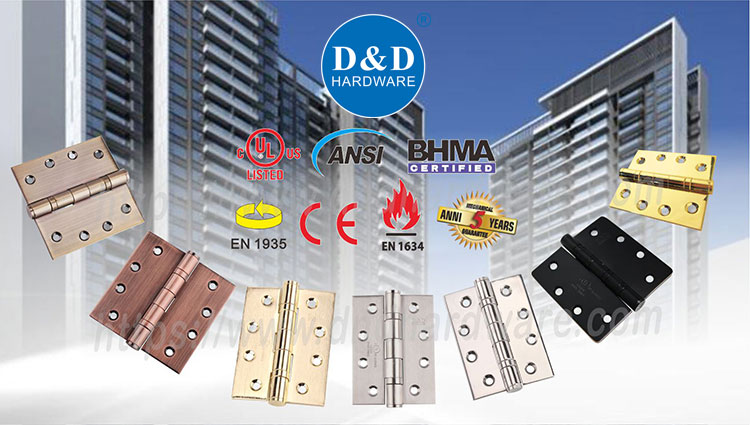
How Door Hinges Work: The Core Mechanism
At a fundamental level, a door hinge is a mechanical joint that allows rotation between two connected parts: the door and the frame. The movement is controlled through a fixed pivot point, enabling smooth and repeated opening and closing.
A standard hinge works through a simple rotational principle:
• Two metal plates (leaves) are attached separately to the door and frame
• Cylindrical sections (knuckles) interlock between the two leaves
• A central pin passes through the knuckles, forming the axis of rotation
When force is applied to the door, it rotates around the pin. At the same time, the hinge supports the door’s weight and keeps it aligned vertically. The entire system must balance movement and stability.
In real applications, hinges must handle multiple forces at once:
• The vertical load created by the door’s weight
• Horizontal forces generated during opening and closing
• Friction between moving parts
• Long-term wear from repeated use
High-quality hinges are designed to distribute these forces efficiently, ensuring smooth motion and long service life.
Key Components of a Door Hinge
Although hinge designs vary, most share a similar structure. Understanding these parts helps explain how performance is achieved.
• Leaves
Flat plates fixed to the door and frame. They provide structural support and hold the hinge in place.
• Knuckles (Barrels)
Rounded sections along the edge of each leaf. These interlock to create the hinge’s pivot structure.
• Pin
A solid metal rod inserted through the knuckles. This is the central axis that allows rotation.
• Bearing Surface
The contact area between the pin and knuckles. In advanced hinges, this may include ball bearings to reduce friction.
• Fasteners
Screws used to secure the hinge firmly to both surfaces.
Each component contributes to overall performance. Even small improvements—such as tighter tolerances or smoother bearing surfaces—can significantly enhance durability.
Main Types of Door Hinges and Their Working Differences
Different hinge types are designed for specific applications. While the basic principle remains the same, structural variations affect performance, load capacity, and appearance.
Butt Hinges
Butt hinges are the most widely used type in residential and commercial doors. They are simple, reliable, and cost-effective.
They work by rotating around a central pin. When installed properly, they provide stable support and smooth movement.
Typical uses:
• Interior wooden doors
• Office doors
• Standard commercial doors
Ball Bearing Hinges
Ball bearing hinges are designed for higher performance. Small ball bearings are placed between the knuckles to reduce friction during rotation.
This design improves efficiency and durability, especially in high-traffic environments where doors are opened frequently.
Advantages:
• Smoother operation
• Reduced wear
• Higher load capacity
• Longer lifespan
Concealed Hinges
Concealed hinges are hidden when the door is closed, offering a clean and modern appearance. They use a more complex multi-link mechanism instead of a simple pin rotation.
These hinges allow controlled movement and precise adjustments, making them ideal for premium architectural projects.
Typical uses:
• High-end residential interiors
• Cabinets and furniture
• Modern commercial spaces
Continuous Hinges (Piano Hinges)
Continuous hinges run along the full length of the door, distributing weight evenly instead of concentrating it on a few points.
This reduces stress and improves long-term durability, particularly for heavy or frequently used doors.
Typical uses:
• Industrial doors
• Schools and hospitals
• Public facilities
Spring Hinges
Spring hinges contain an internal spring mechanism that automatically returns the door to a closed position after opening.
They combine rotation with controlled closing force, making them suitable for safety and convenience.
Typical uses:
• Fire-rated doors
• Commercial kitchens
• Security doors
Material Selection and Performance Impact
The material of a door hinge directly affects its strength, corrosion resistance, and service life. Choosing the right material is essential for long-term reliability.
| Material | Strength Level | Corrosion Resistance | Recommended Use |
| Stainless Steel 201 | Medium | Moderate | Indoor environments |
| Stainless Steel 304 | High | Excellent | Commercial and humid environments |
| Stainless Steel 316 | Very High | Superior | Coastal and marine environments |
| Carbon Steel | High | Low (with coating) | Industrial applications |
Stainless steel hinges, especially 304 and 316 grades, are widely preferred for export markets due to their balance of strength, durability, and resistance to corrosion.
Load Capacity and Real-World Performance
Hinge performance is not determined by design alone. Several practical factors must be considered when selecting hinges for a project.
• Door weight and dimensions
Heavier and larger doors require stronger hinges or additional hinge points.
• Usage frequency
High-traffic environments demand hinges with better wear resistance, such as ball bearing hinges.
• Installation quality
Improper alignment can cause uneven load distribution and premature failure.
• Environmental exposure
Humidity, temperature changes, and chemicals can affect material performance.
For example, a heavy commercial door may require three or four high-performance hinges to ensure stability and smooth operation over time.
Installation and Maintenance Guidelines
Proper installation is essential for achieving optimal hinge performance. Even the best hinge cannot function correctly if installed poorly.
Installation recommendations:
• Ensure hinges are aligned vertically
• Use the correct number of hinges based on door height and weight
• Select suitable screws for the door material
• Maintain consistent spacing between hinges
Maintenance also plays a key role in extending lifespan. Regular lubrication reduces friction, while periodic inspections help identify loose screws or early signs of wear.
In demanding environments, cleaning and corrosion checks should be part of routine maintenance.
Common Problems and Practical Solutions
Understanding common hinge issues helps in both selection and maintenance.
• Door sagging
Usually caused by insufficient hinge strength or poor installation. Using heavy-duty hinges or adding more hinges can solve this.
• Noise during operation
Often due to friction or lack of lubrication. Ball bearing hinges can significantly reduce noise.
• Hinge wear over time
Occurs in high-traffic areas. Choosing higher-grade materials improves durability.
• Misalignment
Can result from improper installation or structural movement. Adjustable hinges help correct alignment issues.
Conclusion
Door hinges are fundamental to the performance, safety, and durability of any door system. While their structure may seem simple, their function involves precise engineering to balance movement, load, and long-term reliability.
From standard butt hinges to advanced concealed and continuous designs, each type serves a specific purpose. By understanding how door hinges work and considering factors such as material, load capacity, and environment, buyers and project professionals can make informed decisions.
Selecting the right hinge is not just about cost—it is about ensuring consistent performance, reducing maintenance, and achieving long-term value in any application.
FAQ
Q1: How do door hinges allow smooth movement?
They use a central pin and rotating knuckles to create controlled motion. In advanced designs, ball bearings reduce friction further.
Q2: How many hinges are needed for a door?
Most standard doors use 2–3 hinges. Heavier or taller doors may require 4 or more for proper support.
Q3: Which hinge type is best for high-traffic areas?
Ball bearing hinges are recommended because they reduce wear and provide smoother operation over time.
Q4: What is the most durable hinge material?
Stainless steel 304 and 316 are widely considered the most durable options, especially in humid or outdoor environments.