

Introduction: Why Fire Rated Hinges Matter More Than You Think
Fire safety is not just about doors—it’s about the complete system. While architects and contractors often focus on fire-rated doors and door closers, the importance of fire rated door hinges is sometimes underestimated. In reality, hinges are a critical load-bearing component that must continue functioning even under extreme fire conditions.
When a fire breaks out, temperatures can rise rapidly beyond 800°C (1472°F). Under such conditions, standard hinges may deform, fail, or even detach, causing the door to collapse and allowing fire and smoke to spread. This is where UL certified fire rated hinges become essential.
In this guide, we will break down everything you need to know about UL certification, especially UL 10C 3-hour fire ratings, and how to choose the right fire rated hinges for your project. Whether you are a distributor, contractor, or project manager, this article will help you make informed decisions while improving compliance and safety.

What Are Fire Rated Door Hinges?
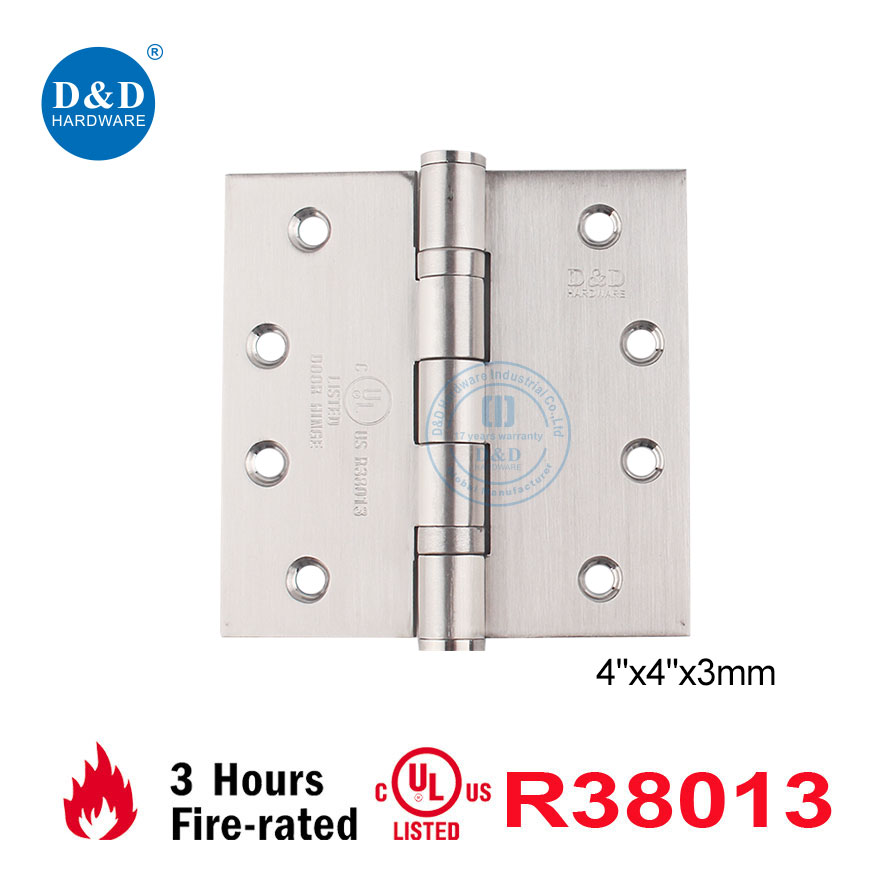
Fire rated door hinges are specially engineered hinges designed to maintain structural integrity and functionality during a fire. Unlike standard hinges, they are manufactured using high-grade stainless steel and undergo rigorous fire testing to ensure they can withstand extreme heat without failure.
These hinges are used in fire-rated door assemblies, which typically include:
• Fire-rated door leaf
• Fire-rated frame
• Fire-rated hinges
• Fire-rated locks and hardware
• Door closers and seals
Each component must meet strict fire safety standards to ensure the entire system performs as intended.
Key Characteristics of Fire Rated Hinges
• Made from stainless steel (commonly 304 or 316)
• High load-bearing capacity
• Heat resistance and minimal deformation
• Compatibility with fire-rated doors (wood or metal)
• Tested as part of a complete fire door assembly
Fire rated hinges are not optional—they are mandatory in many commercial, industrial, and public building applications where fire safety regulations apply.
Understanding UL Certification for Fire Rated Hinges
UL certification is one of the most recognized safety standards in the world. UL stands for Underwriters Laboratories, an independent organization that tests and certifies products for safety and performance.
For fire rated door hinges, the most relevant standard is:
UL 10C – Positive Pressure Fire Tests of Door Assemblies
This standard evaluates how well a door assembly—including hinges—performs during a fire under positive pressure conditions, which more accurately simulate real fire scenarios.
What Does a 3-Hour Fire Rating Mean?
A 3-hour fire rating indicates that the door assembly, including the hinges, can withstand fire exposure for up to 180 minutes without failure.
During UL 10C testing:
• The assembly is exposed to controlled fire conditions
• Temperatures follow a standardized time-temperature curve
• Structural integrity is monitored throughout the test
• The door must remain in place and resist flame penetration
Typical Temperature Profile (Simplified)
| Time (minutes) | Temperature (°C) |
| 5 | ~576°C |
| 30 | ~843°C |
| 60 | ~927°C |
| 120 | ~1010°C |
| 180 | ~1093°C |
This extreme environment highlights why only certified components should be used in fire-rated assemblies.
UL 10C Certified Hinges: What to Look For
Not all hinges labeled “fire rated” are equal. To ensure compliance and reliability, you should verify that the hinges meet UL certification requirements.
Key Factors to Consider
1. Certification Details
Look for clear documentation such as:
• UL 10C certification
• Fire rating duration (e.g., 3-hour)
• File number (e.g., UL File No. R40717)
2. Material Quality
Fire rated hinges should be made from:
• Stainless steel 304 (general use)
• Stainless steel 316 (corrosive environments)
3. Bearing Type
Ball bearing hinges are preferred because they:
• Provide smoother operation
• Reduce wear under heavy loads
• Perform better under high temperatures
4. Load Capacity
Ensure the hinge can support the door weight, especially for heavy fire doors.
5. Compatibility
The hinge must be tested as part of a complete fire door assembly. Mixing uncertified components can void compliance.
Standard vs Fire Rated Hinges: A Clear Comparison
| Feature | Standard Hinges | Fire Rated Hinges |
| Fire Resistance | None | Up to 3 hours |
| Certification | Not required | UL 10C certified |
| Material | Various | Stainless steel (304/316) |
| Application | Residential/light use | Commercial & fire doors |
| Safety Compliance | Low | High |
| Cost | Lower | Higher (but essential) |
While standard hinges may be sufficient for residential use, they are not suitable for fire-rated doors in commercial or public buildings.
Applications of 3-Hour Fire Rated Hinges
Fire rated hinges are widely used in buildings where safety regulations are strict. Common applications include:
• Commercial office buildings
• Hospitals and healthcare facilities
• Hotels and hospitality projects
• Airports and transportation hubs
• Industrial plants
• High-rise residential buildings
In these environments, fire doors act as barriers that compartmentalize fire and smoke, giving occupants more time to evacuate and reducing property damage.
Installation and Compliance Best Practices
Proper installation is just as important as selecting the right hinge. Even UL certified hinges can fail if installed incorrectly.
Best Practices
• Use the correct number of hinges (typically 3 or more for fire doors)
• Follow manufacturer guidelines strictly
• Ensure proper alignment and spacing
• Use compatible screws and accessories
• Avoid unauthorized modifications
Compliance Tip
Always ensure that all components in the door assembly are certified and compatible. Fire safety inspections often check for consistency across the entire system.
Why Choose D&D Hardware Fire Rated Hinges?
At D&D Hardware, we understand the importance of safety, reliability, and compliance in fire-rated applications. Our fire rated door hinges are designed and manufactured to meet the highest international standards.
Key Advantages
• UL 10C certified 3-hour fire rated (File No. R40717)
• Tested for durability with over 2 million cycles
• Manufactured from high-quality stainless steel (304/316)
• Precision engineering for smooth and reliable performance
• Suitable for both wood and metal fire doors
Our hinges are trusted by professionals worldwide for projects that demand both safety and performance.
FAQ: Fire Rated Door Hinges
Q1: Are all stainless steel hinges fire rated?
No. While stainless steel improves heat resistance, only hinges that have passed fire testing and obtained certification (such as UL 10C) are considered fire rated.
Q2: Can I use standard hinges on a fire-rated door?
No. Using non-certified hinges can compromise the entire fire door assembly and may violate building codes.
Q3: How many hinges are required for a fire door?
Typically, at least three hinges are required, but this depends on the door size, weight, and local regulations.
Q4: What is the difference between UL 10B and UL 10C?
UL 10C uses positive pressure testing, which better simulates real fire conditions, making it more widely accepted in modern building codes.
Q5: Do fire rated hinges require maintenance?
Yes. Regular inspection and maintenance ensure long-term performance and compliance.
Conclusion: Safety Starts with the Right Hardware
Fire rated door hinges are a small component with a big responsibility. In critical situations, their performance can mean the difference between containment and catastrophe. Choosing UL certified 3-hour fire rated hinges ensures that your fire door system performs as intended when it matters most.
For distributors, contractors, and project owners, investing in certified, high-quality hinges is not just about compliance—it’s about protecting lives and property.