

Choosing the right material for door hinges is a critical decision that directly impacts durability, corrosion resistance, lifecycle cost, and long-term project performance. Among all available materials, stainless steel 304 and stainless steel 316 remain the two most widely specified options in commercial, industrial, and architectural projects worldwide.
However, many buyers, contractors, and project managers still struggle with a key question: Is 316 stainless steel always better than 304? Or is 304 sufficient for most applications?
This comprehensive guide will help you understand the real differences between 304 vs 316 stainless steel door hinges, their advantages, limitations, application scenarios, and how to choose the most cost-effective option for your specific project. Whether you are sourcing for commercial buildings, hotels, hospitals, or coastal infrastructure, this article is designed to improve your decision-making while boosting your project’s performance and compliance.
Understanding Stainless Steel 304 and 316
Stainless steel is an alloy primarily composed of iron, chromium, and other elements that enhance corrosion resistance. The key difference between 304 and 316 lies in their chemical composition, particularly the presence of molybdenum in 316.
Stainless steel 304 is the most commonly used grade due to its excellent balance of corrosion resistance, strength, and cost. It contains approximately 18% chromium and 8% nickel, making it highly resistant to oxidation and general corrosion in indoor and mildly humid environments.
On the other hand, stainless steel 316 includes an additional 2–3% molybdenum. This element significantly improves resistance to chlorides and harsh environments, such as coastal areas, marine applications, and industrial zones exposed to chemicals.
While both materials belong to the austenitic stainless steel family and share many characteristics, their performance differs significantly under specific environmental conditions.
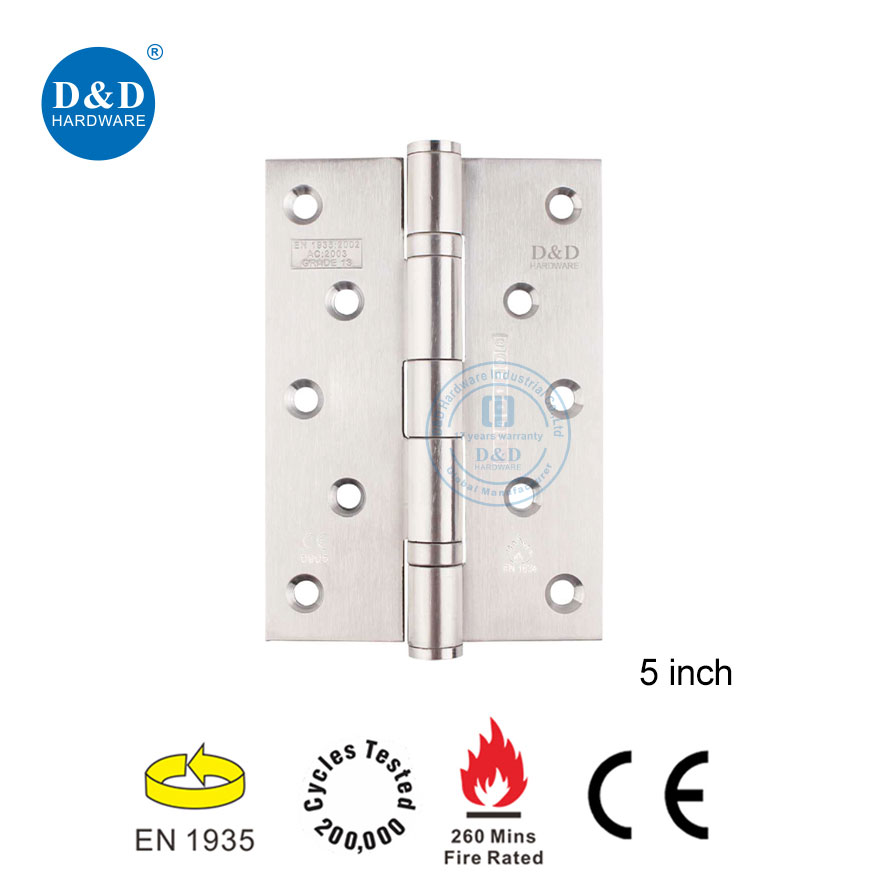
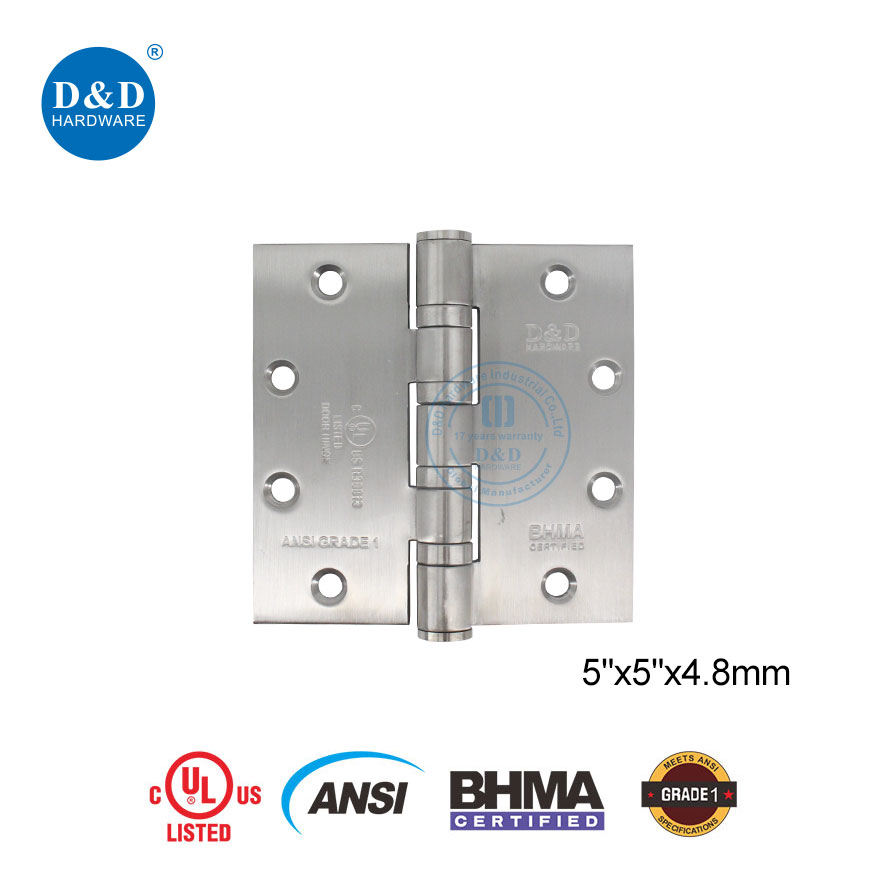
Key Differences Between 304 and 316 Door Hinges
To clearly understand how these materials compare, the table below highlights the most important differences:
| Feature | Stainless Steel 304 Hinges | Stainless Steel 316 Hinges |
| Corrosion Resistance | Good (indoor & mild outdoor) | Excellent (marine & chemical environments) |
| Chloride Resistance | Moderate | High |
| Cost | Lower | Higher (10–30% more) |
| Durability in Harsh Environments | Limited | Superior |
| Common Applications | Residential, offices, hotels | Coastal buildings, hospitals, marine projects |
| Maintenance Requirement | Low | Very low |
From a performance perspective, 316 clearly outperforms 304 in aggressive environments. However, this does not automatically make it the better choice in all cases.
Performance in Different Environments
One of the most important factors when choosing between 304 and 316 door hinges is the installation environment. Material selection should always be based on exposure conditions rather than assumptions.
In indoor environments such as offices, residential buildings, and shopping malls, stainless steel 304 performs exceptionally well. It resists moisture, fingerprints, and everyday wear while maintaining its structural integrity over time. For most commercial projects, 304 hinges provide more than enough durability at a competitive cost.
However, the situation changes dramatically in outdoor or high-risk environments.
For example:
• Coastal areas with salt-laden air accelerate corrosion
• Industrial zones expose hardware to chemicals and pollutants
• Hospitals and laboratories require high hygiene and corrosion resistance
• Swimming pools and humid environments increase oxidation risks
In these cases, stainless steel 316 becomes the preferred option. The molybdenum content enhances resistance to pitting corrosion and rust formation, ensuring longer service life and reduced maintenance costs.
A common mistake in procurement is using 304 hinges in coastal projects to reduce upfront costs. While this may seem economical initially, it often leads to premature failure, replacement costs, and customer dissatisfaction.
Mechanical Strength and Load Performance
In terms of mechanical properties, both 304 and 316 stainless steel offer excellent strength and load-bearing capacity. For door hinge applications, especially heavy-duty or high-traffic doors, the design (such as ball bearing hinges) often matters more than the material itself.
That said, both materials provide:
• High tensile strength
• Strong wear resistance
• Reliable long-term performance
When combined with precision engineering and ball bearing mechanisms, both 304 and 316 hinges can achieve high cycle performance, making them suitable for commercial applications such as hotels, hospitals, and office buildings.
For projects requiring ANSI Grade 1 performance (typically exceeding 2 million cycles), both materials can meet the requirement when properly manufactured.
Cost vs Value: Is 316 Worth the Investment?
Cost is often the deciding factor in material selection. Stainless steel 316 hinges typically cost 10% to 30% more than 304 hinges, depending on raw material prices and specifications.
However, evaluating cost purely based on initial price can be misleading. A more effective approach is to consider lifecycle cost.
Here’s how the value comparison plays out:
• 304 Hinges
• Lower upfront cost
• Suitable for controlled environments
• May require replacement in harsh conditions
• 316 Hinges
• Higher initial investment
• Longer lifespan in aggressive environments
• Reduced maintenance and replacement costs
For indoor projects, 304 provides the best cost-performance ratio. But for coastal or industrial environments, 316 is often the more economical choice in the long run.
Application Scenarios: When to Choose 304 or 316
Choosing the right hinge material depends on your project type, location, and performance expectations.
Choose Stainless Steel 304 Hinges When:
• The project is located indoors
• The environment is dry or mildly humid
• Budget control is a priority
• Standard commercial performance is sufficient
Typical applications include:
• Residential buildings
• Office spaces
• Retail stores
• Interior hotel doors
Choose Stainless Steel 316 Hinges When:
• The project is near coastal areas
• The environment contains salt, chlorine, or chemicals
• Long-term durability is critical
• Maintenance access is limited
Typical applications include:
• Coastal hotels and resorts
• Marine infrastructure
• Hospitals and cleanrooms
• Industrial facilities
Making the right choice at this stage can significantly reduce future maintenance costs and improve customer satisfaction.
Surface Finishes and Aesthetic Considerations
Both 304 and 316 stainless steel hinges can be manufactured with a wide range of surface finishes, including:
• Satin (brushed)
• Polished
• Matte black
• PVD coatings
From an aesthetic perspective, there is little visible difference between 304 and 316. However, in outdoor environments, 316 maintains its appearance longer due to superior corrosion resistance.
For high-end architectural projects, especially in coastal areas, 316 hinges are often preferred not only for performance but also for long-term visual consistency.
Why Material Selection Matters for Global Projects
In global construction and export-oriented projects, selecting the correct hinge material is not just a technical decision—it also affects compliance, reputation, and long-term partnerships.
Different regions have different environmental challenges:
• Southeast Asia: high humidity and coastal exposure
• Middle East: extreme temperatures and sand
• Europe: strict compliance and fire safety standards
• North America: high performance and ANSI requirements
For international buyers and distributors, offering both 304 and 316 options ensures flexibility and competitiveness in different markets.
A strong product strategy often includes:
• 304 hinges for general distribution
• 316 hinges for premium or coastal projects
This approach helps maximize market coverage while maintaining cost efficiency.
How to Choose the Right Supplier
Beyond material selection, choosing a reliable hinge manufacturer is equally important. The quality of stainless steel, precision engineering, and testing standards all influence the final performance.
When evaluating suppliers, consider the following:
• Manufacturing capability and experience
• Cycle testing performance (e.g., 2 million cycles)
• Material traceability
• Surface finishing quality
• Global certifications and standards
A professional supplier should also be able to recommend whether 304 or 316 is more suitable based on your project requirements, rather than simply offering the more expensive option.
Conclusion: 304 vs 316 Door Hinges – Making the Smart Choice
There is no one-size-fits-all answer when comparing stainless steel 304 vs 316 door hinges. The best choice depends on your project environment, budget, and long-term performance expectations.
If your project is located indoors or in a controlled environment, stainless steel 304 hinges offer excellent value, durability, and cost efficiency.
If your project is exposed to coastal, humid, or chemically aggressive conditions, stainless steel 316 hinges provide superior corrosion resistance and long-term reliability.
Ultimately, the smartest decision is not about choosing the “best” material, but choosing the right material for the right environment.