

When selecting door hardware for commercial or residential projects, durability, safety, and compliance are key considerations. Among the most widely recognized performance standards in the architectural hardware industry are the ANSI/BHMA grading levels. These grades help buyers, architects, contractors, and facility managers evaluate how well a lock, hinge, closer, or exit device will perform under real-world conditions.
Two of the most common classifications are ANSI Grade 1 and ANSI Grade 2 door hardware. While both provide reliable performance, they are designed for different usage environments and durability requirements. Understanding the differences between these grades can help you choose the right solution for your project, ensuring long-term functionality, security, and cost efficiency.
In this guide, we will explore the key differences between ANSI Grade 1 and Grade 2 hardware, how these standards are tested, and how to determine which grade is most suitable for your application.
Understanding ANSI/BHMA Door Hardware Standards
ANSI door hardware grading is developed in cooperation with the Builders Hardware Manufacturers Association (BHMA) and the American National Standards Institute. These standards establish clear performance benchmarks for various types of architectural hardware, including locks, hinges, door closers, and exit devices.
The grading system typically includes three levels:
♦ Grade 1 – Commercial Grade (Highest durability)
♦ Grade 2 – Heavy Residential / Light Commercial
♦ Grade 3 – Standard Residential
The grading is determined through a series of laboratory tests that simulate real-life usage conditions. These tests examine durability, strength, operational smoothness, and resistance to wear.
For example, door locks are subjected to repeated cycles to simulate years of use. Impact tests, torque tests, and resistance tests ensure the hardware can withstand demanding environments. A product that meets Grade 1 standards must pass significantly stricter testing compared with Grade 2 hardware.
This grading system allows architects and buyers to compare products objectively, ensuring the selected hardware meets the required performance level for a building.

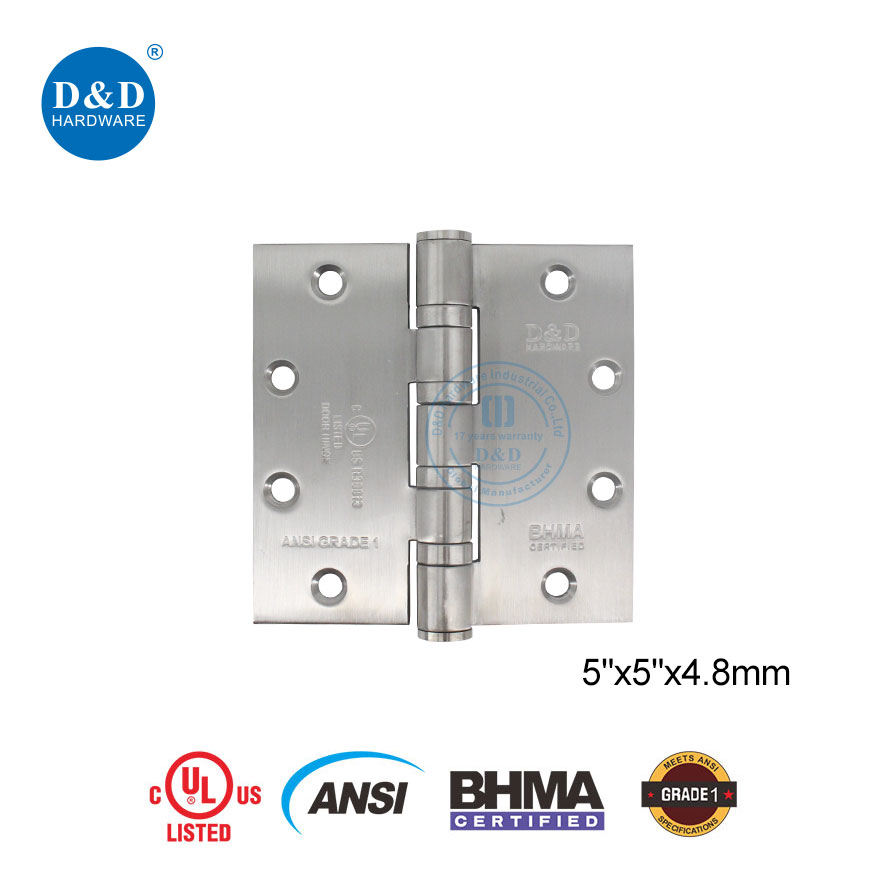
What Is ANSI Grade 1 Door Hardware?
ANSI Grade 1 door hardware represents the highest level of performance and durability within the ANSI/BHMA classification system. It is specifically designed for heavy-duty commercial environments where doors experience frequent and demanding use.
Examples of locations where Grade 1 hardware is commonly used include office buildings, hospitals, airports, schools, and government facilities. In these environments, doors may be opened thousands of times per day, requiring hardware that can withstand constant operation without failure.
Typical characteristics of Grade 1 door hardware include:
♦ Higher cycle testing requirements (often up to 1,000,000 cycles depending on product type)
♦ Greater resistance to torque and impact
♦ Enhanced internal components for durability
♦ Stronger materials and construction
♦ Longer service life under heavy traffic
Grade 1 hardware is also commonly required in buildings with strict safety regulations, such as fire-rated doors and emergency exit systems. Because of its superior performance level, it is widely specified by architects and commercial building designers.
Although Grade 1 hardware is usually more expensive initially, the extended lifespan and reduced maintenance often make it more cost-effective in high-traffic environments.
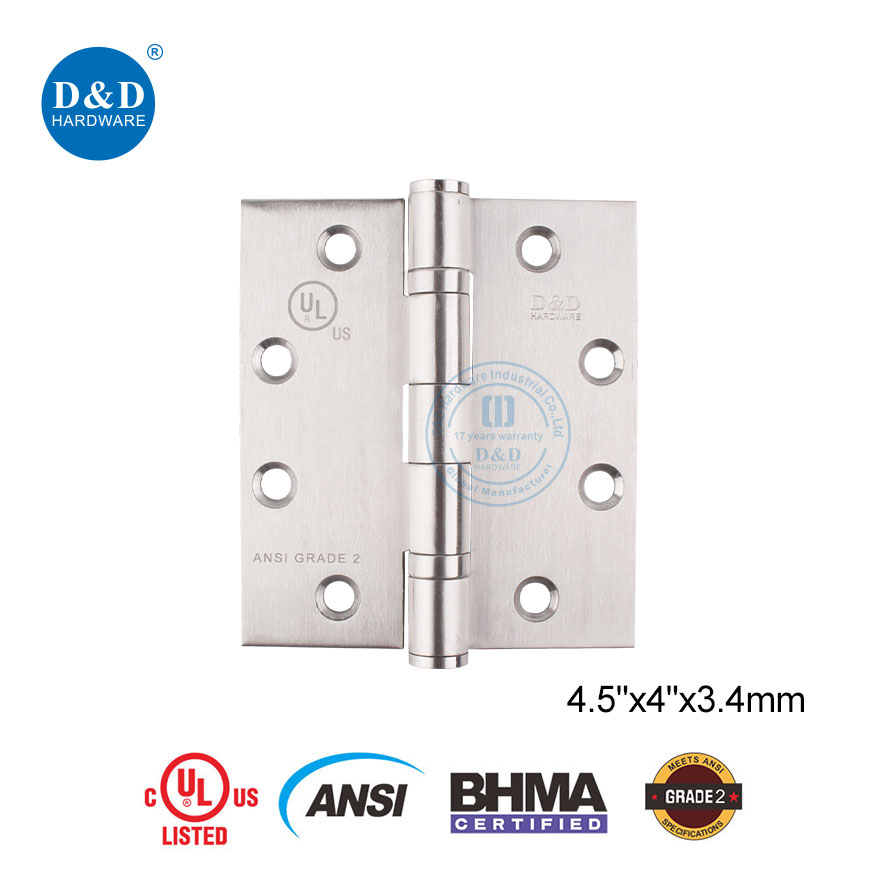
What Is ANSI Grade 2 Door Hardware?
ANSI Grade 2 door hardware provides reliable performance for moderate-use environments. It is designed for applications that require durability but do not experience the same level of traffic as commercial facilities.
Typical applications for Grade 2 hardware include:
♦ Residential homes
♦ Apartment buildings
♦ Small offices
♦ Retail shops
♦ Interior commercial doors with moderate traffic
While Grade 2 hardware is still built to meet strict quality standards, its testing requirements are lower than Grade 1 products. For example, locks may be tested for around 400,000 operating cycles, which is sufficient for many residential and light commercial applications.
Some key characteristics of Grade 2 hardware include:
♦ Strong and reliable construction
♦ Good durability for medium usage levels
♦ More cost-effective than Grade 1 hardware
♦ Suitable for residential and small commercial projects
For many projects, Grade 2 hardware provides an excellent balance between performance and cost. It delivers dependable functionality without the higher investment required for heavy-duty commercial-grade products.
Key Differences Between ANSI Grade 1 and Grade 2 Hardware
Although Grade 1 and Grade 2 products may look similar on the outside, their internal construction and performance capabilities can differ significantly. These differences become particularly important in environments with frequent door usage.
1. Durability and Cycle Testing
Grade 1 hardware is tested for a significantly higher number of cycles compared with Grade 2 products. This means Grade 1 components are designed to operate reliably over a much longer period in high-traffic locations.
2. Strength and Resistance
Grade 1 products must meet higher standards for torque resistance, impact strength, and structural durability. This ensures they can handle heavier doors and more demanding operating conditions.
3. Application Environment
Grade 1 hardware is primarily used in commercial and institutional buildings, while Grade 2 hardware is typically used in residential or light commercial environments.
4. Cost Considerations
Because of the stronger materials and higher testing requirements, Grade 1 hardware generally costs more than Grade 2. However, in high-traffic environments, the longer lifespan often offsets the higher upfront investment.
5. Maintenance and Longevity
Grade 1 hardware tends to require less frequent replacement or maintenance, especially in buildings where doors are used continuously throughout the day.
These differences highlight why choosing the correct grade is essential when planning a door hardware specification.
When Should You Choose ANSI Grade 1 Hardware?
There are several situations where Grade 1 hardware is the preferred option. Buildings with heavy daily traffic or strict safety requirements benefit greatly from the increased durability and reliability of Grade 1 products.
Grade 1 hardware is typically recommended for:
♦ Commercial office buildings
♦ Schools and universities
♦ Hospitals and healthcare facilities
♦ Airports and transportation hubs
♦ Government buildings
♦ Hotels and large retail centers
In these environments, door hardware must function consistently despite frequent use. Failure of door hardware in such settings can lead to security risks, operational disruptions, and increased maintenance costs.
Grade 1 hardware also offers improved resistance against forced entry and mechanical wear, making it a preferred choice for high-security areas.
When Is ANSI Grade 2 Hardware the Right Choice?
While Grade 1 products offer maximum durability, Grade 2 hardware is often the more practical choice for many projects where traffic levels are moderate.
Situations where Grade 2 hardware works well include:
♦ Residential homes
♦ Apartment complexes
♦ Small offices
♦ Interior doors in commercial buildings
♦ Low to medium traffic retail spaces
In these applications, the doors are used less frequently, and the extreme durability of Grade 1 hardware may not be necessary. Choosing Grade 2 hardware can help reduce project costs while still maintaining good reliability and safety.
For many developers and contractors, Grade 2 hardware provides the best balance between performance and budget.
Choosing the Right Door Hardware for Your Project
Selecting the appropriate ANSI grade should be part of a broader door hardware planning process. In addition to grade classification, several other factors should be considered.
Door type and weight
Heavy commercial doors often require stronger hardware that meets higher performance standards.
Traffic frequency
Doors that are used hundreds or thousands of times per day should typically use Grade 1 hardware.
Security requirements
Higher security areas may require stronger internal components and locking mechanisms.
Compliance and regulations
Certain building codes or fire safety regulations may require specific hardware grades.
Long-term maintenance costs
Investing in higher-grade hardware can reduce replacement and repair costs over time.
Working with experienced door hardware manufacturers or suppliers can help ensure the correct products are selected for each specific application.
Conclusion
ANSI/BHMA grading provides a reliable method for evaluating the performance and durability of door hardware. While both Grade 1 and Grade 2 products meet strict quality standards, they are designed for different levels of usage.
Grade 1 door hardware offers maximum durability and is best suited for high-traffic commercial environments where reliability and long-term performance are essential. Grade 2 hardware, on the other hand, provides dependable performance for residential and moderate-use commercial applications at a more economical price point.
By understanding the differences between these two grades, architects, contractors, and project managers can make more informed decisions when specifying door hardware. Choosing the right grade not only improves security and functionality but also ensures that doors continue to operate smoothly for many years.
Please contact us at any time.
David Jian:
Email:sales@danddhardware.com
Tel / WhatsApp / Wechat:+86-139 2903 7292