

Choosing the right door hinge for commercial doors is a critical step in ensuring long-term durability, smooth operation, and overall building safety. In commercial environments such as office buildings, hotels, hospitals, schools, and retail spaces, doors are opened and closed thousands of times every day. Because of this high usage frequency, the performance of door hinges directly affects the reliability, security, and maintenance costs of the entire door system.
Unlike residential applications, commercial doors must meet stricter performance requirements. They are often heavier, larger, and used more frequently. In addition, many commercial doors must comply with fire safety regulations, accessibility standards, and building codes. A properly selected hinge ensures that the door operates smoothly, aligns correctly with the frame, and maintains consistent performance over many years.
However, selecting the correct hinge is not simply about choosing a standard size. Several factors must be evaluated carefully, including door weight, hinge material, load capacity, opening frequency, environmental conditions, and installation requirements. Understanding these key considerations helps architects, contractors, and project managers make better decisions when specifying door hardware for commercial projects.
Understanding the Role of Door Hinges in Commercial Door Systems
Door hinges may appear to be small components, but they play a fundamental role in the performance of the entire door system. A hinge connects the door leaf to the frame and allows the door to rotate smoothly along a fixed axis. If the hinge is poorly selected or incorrectly installed, the door may sag, misalign, or fail prematurely.
In commercial environments, door hinges must support significant weight while maintaining precise alignment. Many commercial doors include additional hardware such as door closers, locks, access control devices, and seals. All of these components place additional stress on the hinges, which makes selecting the right hinge even more important.
A well-designed hinge provides several key benefits:
• Smooth and stable door movement even with frequent use
• Proper weight distribution to prevent door sagging
• Long service life with minimal maintenance
• Compatibility with other door hardware such as door closers and locks
• Improved safety and reliability in high-traffic environments
Because commercial doors are expected to function reliably for many years, hinge selection should always be considered part of the overall door hardware planning process rather than an afterthought.
Key Factors to Consider When Choosing Commercial Door Hinges
When selecting door hinges for commercial applications, several technical factors must be evaluated to ensure optimal performance.
Door Weight and Size
Door weight is one of the most important factors when choosing a hinge. Heavy commercial doors require hinges with higher load-bearing capacity to prevent sagging or structural stress.
Large doors made from solid wood, metal, or glass typically require heavy-duty hinges that can distribute the weight evenly across the frame. If the hinge capacity is too low, the door may gradually shift downward, causing alignment problems and difficulty closing.
In many cases, using three or four hinges instead of two can significantly improve stability and durability for taller doors.
Frequency of Use
Commercial doors in busy areas such as shopping malls, office entrances, and hospitals experience extremely high traffic. Hinges used in these locations must withstand constant movement without wearing out quickly.
High-cycle hinges are designed specifically for these demanding environments. They use durable internal mechanisms and precision bearings that reduce friction and maintain smooth operation over hundreds of thousands of cycles.
For doors that are used less frequently, standard commercial hinges may still provide reliable performance while keeping costs manageable.
Door Material and Construction
The material of the door also affects hinge selection. Different door materials create different structural loads and installation requirements.
Common commercial door materials include:
• Wood doors used in offices and hotels
• Steel doors commonly used in industrial and security applications
• Aluminum frame doors found in commercial storefronts
• Glass doors used in modern architectural designs
Each door type may require different hinge configurations, mounting methods, and reinforcement solutions. Ensuring compatibility between the hinge and door construction helps maintain structural integrity.
Types of Door Hinges Used in Commercial Buildings
Several types of hinges are commonly used in commercial projects. Each type is designed to address specific door requirements and installation environments.
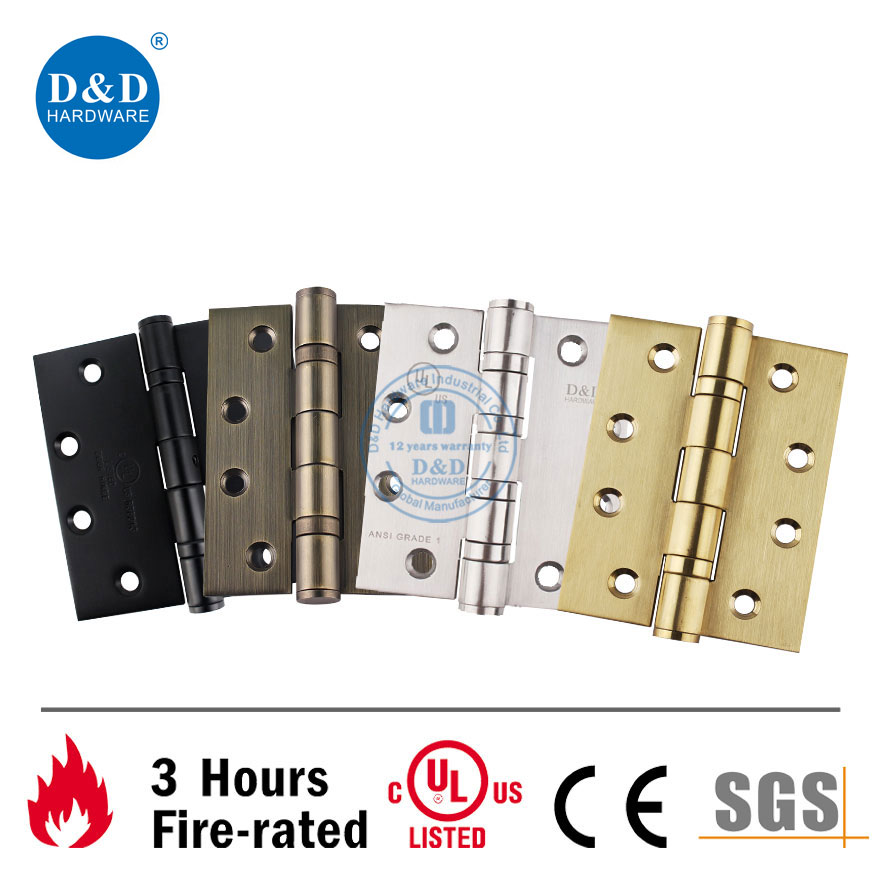
Butt Hinges
Butt hinges are the most widely used hinge type in commercial doors. They consist of two rectangular plates connected by a central pin. One plate is attached to the door while the other is fixed to the frame.
These hinges provide strong support, easy installation, and reliable long-term performance. They are available in a wide range of sizes and load capacities, making them suitable for most commercial door systems.
Because of their simple design and versatility, butt hinges are often the preferred option for offices, schools, and residential-commercial mixed buildings.
Ball Bearing Hinges
Ball bearing hinges are designed for heavy doors and high-traffic environments. They incorporate internal bearings that reduce friction between the hinge knuckles, allowing smoother and quieter operation.
Compared with standard hinges, ball bearing hinges offer several advantages:
• Reduced wear from continuous movement
• Increased durability for heavy doors
• Quieter door operation
• Longer service life in demanding environments
These hinges are commonly used in commercial buildings where doors are frequently opened throughout the day.
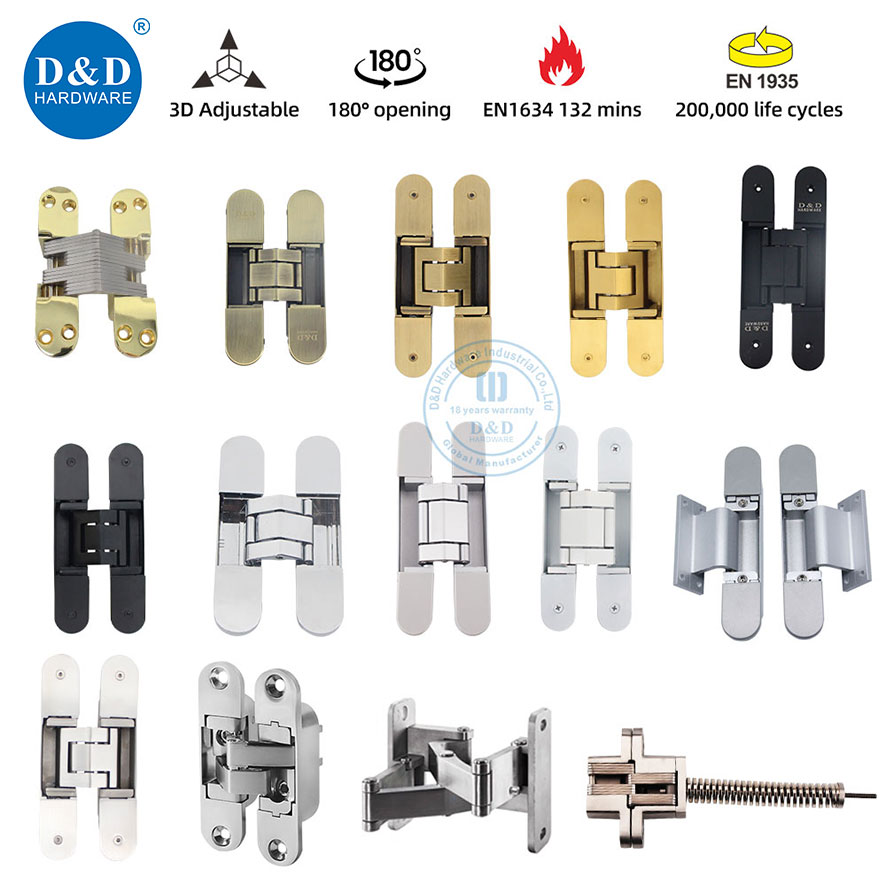
Concealed Hinges
Concealed hinges are installed inside the door and frame so they remain invisible when the door is closed. They are often used in modern architectural designs where aesthetics are a priority.
In addition to their clean appearance, concealed hinges can also provide enhanced security because the hinge components are not accessible from outside the door.
However, concealed hinges usually require precise installation and are often used in specialized door systems.
Selecting the Right Hinge Material for Durability
The material of the hinge significantly influences its strength, corrosion resistance, and overall lifespan. In commercial applications, selecting the appropriate material ensures reliable performance even under challenging environmental conditions.
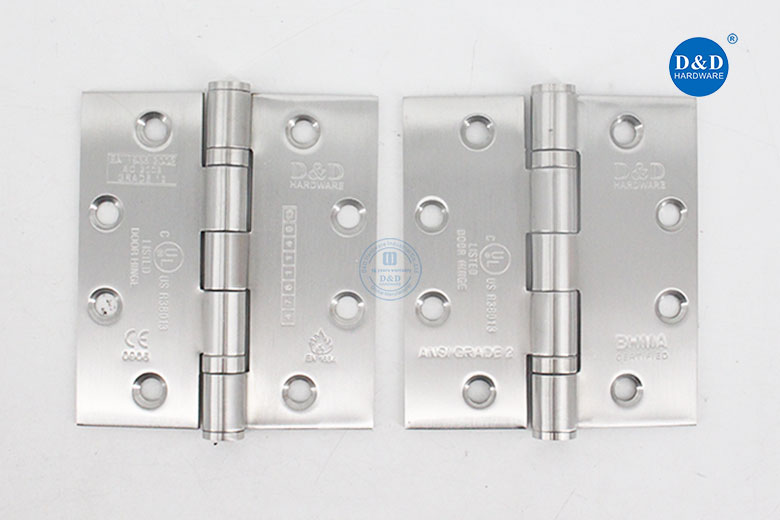
Stainless steel is one of the most commonly used materials for commercial hinges due to its excellent durability and corrosion resistance. It performs well in both indoor and outdoor environments, including humid areas such as coastal regions, kitchens, and hospitals.
Common stainless steel options include:
• Stainless Steel 201 – economical option for interior applications
• Stainless Steel 304 – widely used for most commercial projects due to its strong corrosion resistance
• Stainless Steel 316 – ideal for harsh environments such as marine or high-humidity locations
Choosing the right material not only improves hinge lifespan but also reduces maintenance costs over time.
Installation Considerations for Commercial Door Hinges
Even the highest-quality hinge will not perform well if it is installed incorrectly. Proper installation ensures the hinge can distribute door weight evenly and maintain correct alignment.
Several installation factors must be considered:
• Correct hinge spacing along the door edge
• Precise alignment between door and frame
• Proper screw selection for strong mounting
• Reinforcement of door frames when necessary
For tall or heavy doors, additional hinges may be required to maintain structural stability. Professional installation helps ensure that the hinge system functions smoothly and meets building safety standards.
Additionally, installers must verify that hinges are compatible with other hardware such as door closers, locks, and access control systems. A fully coordinated door hardware system reduces the risk of operational issues after installation.
Long-Term Maintenance and Performance
Commercial doors must maintain consistent performance over many years of daily use. Regular maintenance helps extend the lifespan of hinges and ensures the door continues to operate safely.
Routine maintenance typically includes:
• Inspecting hinges for signs of wear or loosened screws
• Cleaning hinge surfaces to remove dust or debris
• Applying lubrication when necessary to reduce friction
• Checking door alignment to prevent uneven stress
High-quality hinges designed for commercial use usually require minimal maintenance, but periodic inspection can prevent small issues from developing into larger mechanical failures.
Proper hinge selection also reduces long-term maintenance needs. When hinges are correctly matched to door weight, traffic level, and environmental conditions, they can operate reliably for hundreds of thousands of cycles.
Conclusion
Choosing the right door hinge for commercial doors is essential for ensuring the durability, safety, and smooth operation of the entire door system. Because commercial doors are subject to heavier loads and higher usage than residential doors, hinge selection must be carefully evaluated during the design and specification process.
Factors such as door weight, opening frequency, door material, hinge type, and environmental conditions all play important roles in determining the most suitable hinge solution. By selecting high-quality hinges made from durable materials and ensuring proper installation, building owners and project managers can significantly improve the reliability and lifespan of their door systems.
In modern commercial architecture, door hardware is not only about functionality but also about long-term performance and user experience. A well-chosen hinge ensures that doors open and close smoothly, maintain proper alignment, and continue to perform reliably even in the most demanding environments.
Please contact us at any time.
David Jian:
Email:sales@danddhardware.com
Tel / WhatsApp / Wechat:+86-139 2903 7292