

Opening a door lock is an action people perform countless times a day without giving it much thought. Yet, behind this simple motion lies a complex range of mechanisms, engineering principles, and safety considerations. From basic interior privacy locks to advanced mortise systems used in commercial buildings, every lock operates differently, and knowing how to open each type correctly is essential for ensuring safety, convenience, and hardware longevity. This comprehensive guide explores the proper ways to open a variety of door locks, the mechanics behind them, common operational issues, and best practices for smooth, trouble-free performance. As a professional manufacturer of architectural hardware, D&D Hardware offers high-quality door locks, hinges, lever handles, cylinders, and fire-rated hardware that enhance functionality and security in both residential and commercial environments.
Part 1: Understanding the Fundamentals of Door Lock Operation
To understand how to open a door lock correctly, it is important to understand how locks function at the mechanical level. A standard lock is composed of a latch or bolt, a spindle connected to the handle or knob, a strike plate fixed on the frame, and an internal lock body that synchronizes their movements. When a user presses a handle or inserts a key and turns it, the internal cam or springs engage the latch mechanism and retract it from the strike plate, allowing the door to open. Although the basic principle is similar across lock types, the internal components, engineering design, and materials differ widely.
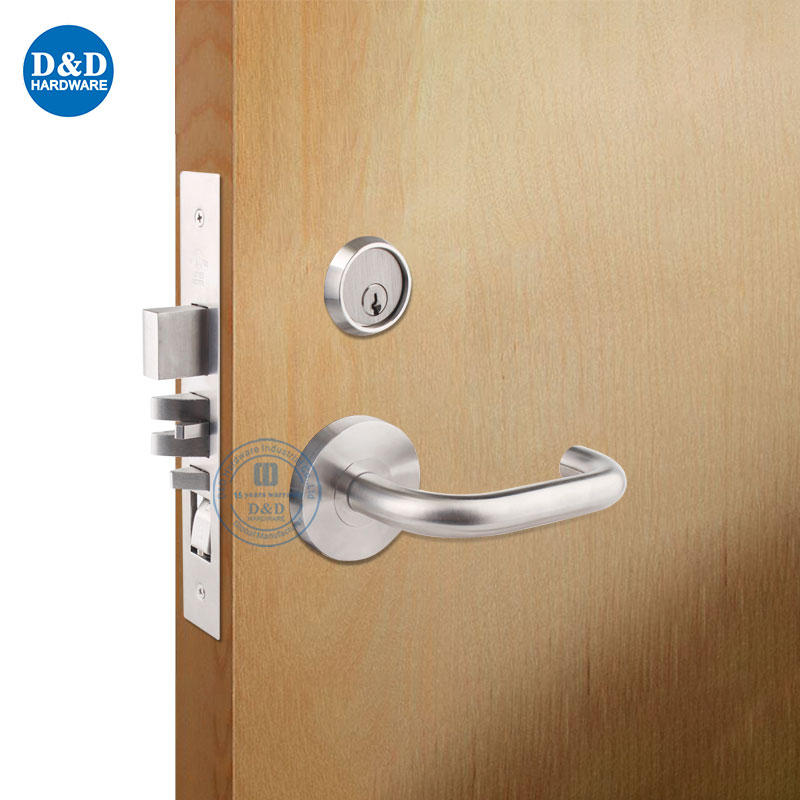
In residential environments, the most common types of locks include cylindrical locks and tubular locks because they are easy to install and provide reliable daily use. However, in commercial and institutional settings where durability is crucial, mortise locks are the preferred choice because they offer superior strength, longevity, and smooth operation. D&D Hardware manufactures high-performance mortise lock bodies, lever handles, panic exit devices, and fire-rated hardware that ensure reliable operation even under heavy daily use. These locks are engineered with stainless steel components and precise internal structures to maintain stability across years of operation.
Advanced locking systems often incorporate multiple levels of technology, such as anti-pick components, anti-shim features, safety releases, and specialized fire-rated constructions. Understanding these mechanical differences helps users operate the locks correctly and prevents unnecessary wear or failures caused by incorrect handling. It also enables technicians, builders, and homeowners to identify operational problems early and maintain the lock’s performance over the years.
Part 2: Opening a Standard Lever or Knob Lock
The most common type of lock is the standard lever handle or knob lock used on interior and exterior doors. Lever handles have become increasingly popular because they offer better ergonomics, require less force to operate, and comply with accessibility standards. A lever handle retracts the latch by applying downward pressure, while a knob retracts the latch when rotated. Although these actions appear straightforward, the quality of the hardware significantly affects the smoothness of operation.
To open a lever handle lock, the user simply presses the lever downward. This motion rotates the spindle, engages the internal springs, and retracts the latch. For knob locks, the user rotates the knob clockwise or counterclockwise depending on the door’s design. Once the latch retracts, the door can be pushed or pulled open. This simple movement is highly dependent on proper installation and high-quality components. Inferior or poorly aligned hardware may cause the latch to drag, making the door difficult to open.
D&D Hardware’s lever handles and tubular locksets are engineered with durable stainless steel and heavy-duty return springs that ensure smooth retraction every time the handle is operated. The ergonomic design and precision machining minimize resistance and help maintain consistent performance, making them ideal for high-traffic use in hotels, residential buildings, commercial offices, and educational facilities. Proper operation also reduces stress on other components such as hinges and strike plates, ensuring the entire door assembly works harmoniously.
Part 3: How to Open a Door Lock with a Key
Keyed locks remain one of the most secure and commonly used locking systems worldwide. Inserting a key into the cylinder aligns internal pins or wafers, allowing the key to rotate and retract the latch or deadbolt. This simple concept depends on extremely precise internal machining. Keyed entry systems are widely used on exterior entrances, office doors, utility areas, and anywhere requiring controlled access.
To open a keyed lock, the user inserts the key fully into the cylinder, making sure the keyway is aligned correctly. Once the key is inserted, it should rotate smoothly. Turning the key clockwise or counterclockwise unlocks the latch. Once the latch or deadbolt retracts, the door can be opened by pushing or pulling the handle or knob. If the lock is properly designed and maintained, the motion should be smooth and require minimal force.
Commercial buildings often use mortise locks with high-security cylinders because they offer superior strength, better tamper resistance, and longer life cycles. D&D Hardware provides architectural-grade mortise lock bodies and cylinders engineered with precise tolerances. This ensures that the key operation remains smooth even after years of use. These locks are suitable for hospitals, airports, government buildings, offices, and industrial facilities that require dependable access control and long-term durability.
Master keying is another important advantage of keyed lock systems. With a well-designed master-key system, different users can have varying levels of access. The ability to open multiple locks with a single master key simplifies facility management and enhances security coordination.
Part 4: Opening Privacy Locks and Interior Turn-Button Mechanisms
Privacy locks are designed for areas where convenience and privacy matter more than high security—such as bedrooms and bathrooms. Opening a privacy lock from the inside is simple, as these locks typically feature a thumb-turn, push-button, or turn-button mechanism. Turning the button engages or disengages the internal locking system, allowing the latch to retract normally from inside.
From outside the room, most privacy locks include a safety release mechanism to prevent accidental lock-ins. For example, a small emergency release hole on the exterior side can be opened using a small tool, coin, or even a flat screwdriver. This allows parents, facility managers, or emergency responders to access the room without damaging the lock or door.
To open a privacy lock from the inside, the user simply turns the thumb-turn or rotates the knob. The latch retracts normally, and no additional action is needed. Privacy locks are designed to always allow immediate exit from the inside for safety reasons. This free-exit function is critical in homes and public buildings, ensuring users never feel trapped.
D&D Hardware manufactures privacy lock models with safety-oriented features and smooth internal mechanics. Their privacy locks are built with stainless steel materials and reliable springs that maintain consistent performance over time. This ensures that even after thousands of uses, the lock continues to open smoothly and safely from both sides.
Part 5: Opening a Deadbolt Lock
Deadbolts provide superior strength compared to standard latches, making them essential for exterior doors or high-security areas. Unlike spring latches, deadbolts rely on a solid metal bolt that extends deep into the door frame. Opening a deadbolt requires the user to fully retract the bolt using a key (from outside) or a thumb-turn (from inside).
To open a deadbolt from the inside, the user turns the thumb-turn or lever connected directly to the bolt. From the outside, the key must be inserted and rotated to retract the bolt completely. If the bolt is not fully retracted, the door will not open. High-quality deadbolts ensure that the turning motion remains smooth and does not require excessive force.
Deadbolts also play a critical role in fire-rated door assemblies. Commercial buildings often require fire-rated locks to comply with international standards. D&D Hardware produces stainless steel deadbolts and fire-rated mortise lock bodies designed for use in certified fire doors, offering enhanced safety and reliability. High-strength materials prevent bolt deformation and ensure ease of operation even under high-temperature conditions.
Part 6: Opening Modern Smart Locks Without Using a Physical Key
Smart locks have transformed building access by replacing physical keys with electronic authentication methods. Smart locks can be opened using numeric keypads, RFID cards, smartphones, biometric sensors, or remote access systems. While the unlocking method varies, the internal mechanical process still involves retracting a latch or deadbolt.
Opening a keypad lock requires entering the correct code. Once verified, the internal motor retracts the latch. For RFID or card locks, tapping the card near the sensor triggers the mechanism. Fingerprint locks authenticate the user’s identity and unlock within seconds. Mobile app locks allow users to open the door with a simple command on their smartphone.
Even though D&D Hardware specializes in mechanical architectural hardware, many contractors integrate D&D mortise lock bodies with electronic smart lock systems. These lock bodies provide the mechanical reliability needed to support the long-term performance of digital locks. The combination of durable mechanical hardware and modern electronic control ensures smooth daily operation.
Part 7: What to Do When a Door Lock Becomes Difficult to Open
A door lock may occasionally become difficult to open due to environmental changes, wear, dirt, improper installation, or hardware misalignment. Identifying the cause helps prevent permanent damage.
Common reasons for a lock being hard to open include swelling of the door due to humidity, loose hinges causing sagging, dirt or debris in the latch, or a dry keyway lacking lubrication. Before applying excessive force, check whether the door is aligned properly with the strike plate. Sometimes lifting the door slightly while turning the handle helps the latch retract.
Lubrication using graphite or silicone-based products can improve keyway and latch movement. Avoid using oil or grease, as they attract dust. Regular maintenance is essential to avoid unnecessary force that may damage the lock or cause mechanical failure.
D&D Hardware’s heavy-duty stainless steel hinges, high-strength lock bodies, and precisely engineered strike plates help prevent alignment issues that often lead to difficult opening. Using durable and corrosion-resistant hardware significantly reduces operational problems over time.
Part 8: Best Maintenance Practices to Ensure Smooth Lock Operation
Preventive maintenance ensures that door locks remain easy to open and continue functioning reliably for years. Regular inspection and cleaning can identify potential issues before they worsen.
It is important to inspect screws on lever handles, hinges, lock bodies, and strike plates. Loose screws may cause misalignment, resulting in difficulty opening the lock. Lubricate moving components such as latches, bolts, and keyways at least twice a year. Dust and debris should be cleaned from the area around the latch and cylinder. For commercial environments with high foot traffic, more frequent inspections may be necessary.
Avoid slamming the door, as this can damage internal components over time. For exterior doors, ensure they are protected from extreme weather conditions whenever possible. High-quality hardware such as the stainless-steel products offered by D&D Hardware significantly reduces the impact of weather and humidity, preventing rust and deterioration.
Proper maintenance, combined with durable hardware, ensures that door locks open smoothly for years, reducing repair costs and enhancing safety.