

Fire safety is one of the most important considerations in commercial, industrial, hospitality, healthcare, and residential building design. While fire-rated doors are widely recognized as a critical part of passive fire protection, the importance of selecting a compatible fire rated door lock is often overlooked.
A fire-rated door assembly only performs as intended when every component—including the lock, hinges, closer, panic hardware, and seals—has been tested to work together. Installing a non-certified lock on a fire-rated door can compromise the entire assembly, potentially allowing fire and smoke to spread much faster during an emergency.
This guide explains what a fire rated door lock is, how it works, where it is used, and how to select the right solution for your project.
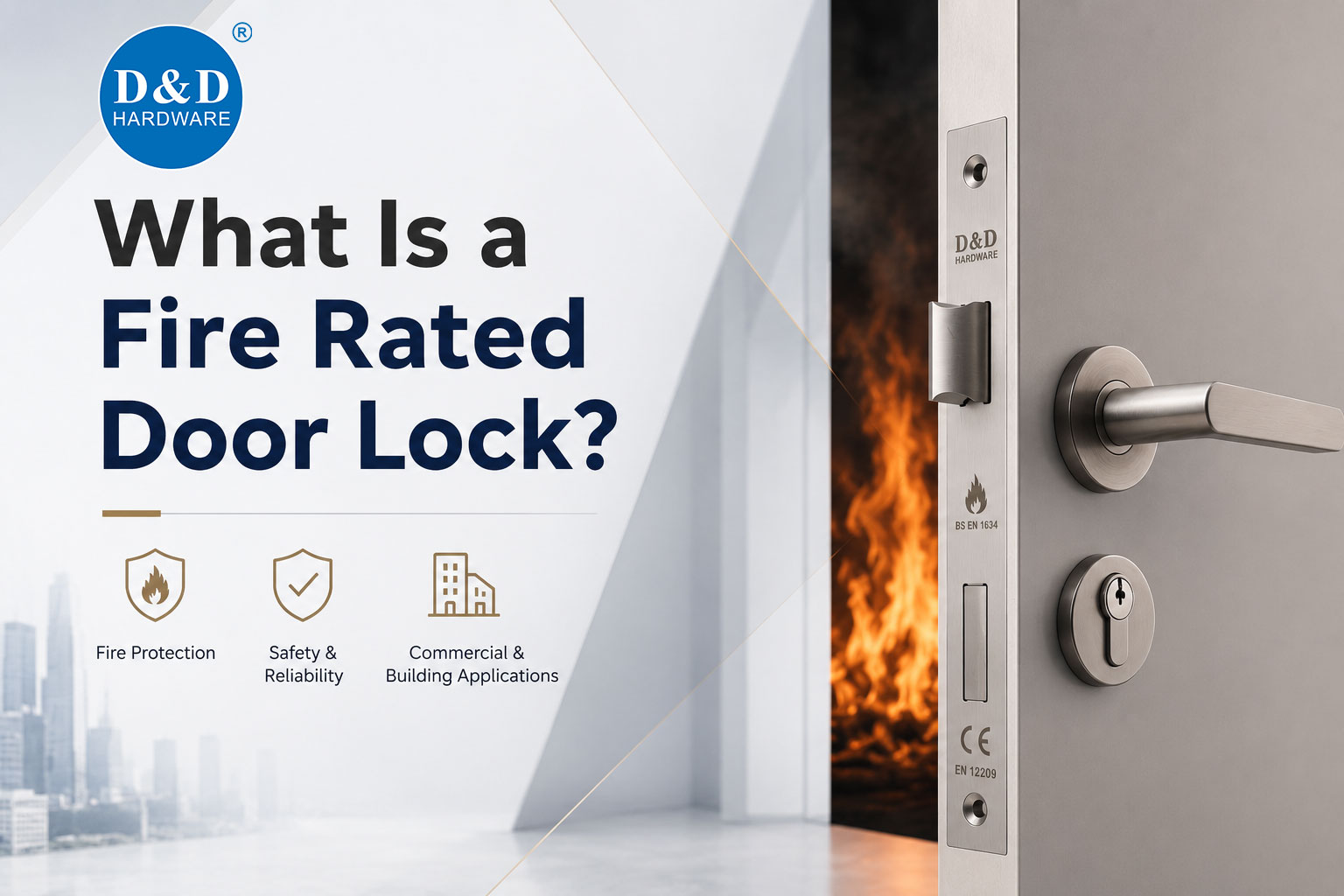
What Is a Fire Rated Door Lock?
A fire rated door lock is a lock specifically designed and tested for installation on fire-resistant doors. Unlike ordinary locks, fire-rated locks are engineered to maintain structural integrity and operational reliability when exposed to high temperatures during a fire.
These locks undergo rigorous fire endurance testing as part of a complete fire door assembly. The objective is to ensure the lock continues to secure the door while allowing occupants to exit safely when required.
A certified fire-rated lock helps the door:
-
Maintain compartmentation during a fire
-
Resist deformation caused by extreme heat
-
Keep the latch securely engaged
-
Continue functioning for emergency egress
-
Reduce the spread of flames and smoke
Simply installing a heavy-duty lock does not make a door fire rated. The lock itself must be tested and approved for use on fire-rated door assemblies.
Why Are Fire Rated Door Locks Important?
Fire doors are designed to slow the spread of fire long enough for occupants to evacuate and firefighters to respond.
The lock plays a surprisingly critical role because it keeps the door positively latched. If the latch fails during a fire, the door may swing open under pressure, allowing flames and smoke to spread rapidly throughout the building.
A properly certified fire rated lock provides several important benefits:
-
Preserves the integrity of the fire door assembly
-
Helps meet building code requirements
-
Improves occupant safety
-
Protects property and valuable assets
-
Reduces liability for building owners
-
Supports successful fire inspections
Without an appropriate lock, even a certified fire-rated door may fail to perform as intended.
How Does a Fire Rated Door Lock Work?
Unlike conventional locks, fire-rated locks are manufactured using heat-resistant materials and reinforced internal mechanisms.
During a fire, the lock is expected to continue holding the door closed while remaining operable for safe evacuation.
Typical design features include:
| Feature | Purpose |
| Heat-resistant latch bolt | Maintains positive latching under high temperatures |
| Reinforced lock body | Resists distortion during fire exposure |
| High-strength springs | Continue functioning under thermal stress |
| Durable stainless steel construction | Improves corrosion resistance and service life |
| Tested internal mechanism | Ensures reliable operation after fire exposure testing |
The exact construction varies depending on the lock type and certification requirements.
Fire Rated vs Standard Door Locks
Although they may appear similar externally, there are significant differences between standard locks and fire-rated locks.
| Feature | Fire Rated Door Lock | Standard Door Lock |
| Fire tested | Yes | No |
| Suitable for fire doors | Yes | No |
| High-temperature performance | Excellent | Limited |
| Building code compliance | Yes | Usually No |
| Certified with fire door assemblies | Yes | No |
| Commercial applications | Widely used | Limited |
Choosing a standard lock for a fire-rated opening can invalidate the certification of the entire door assembly.
Common Types of Fire Rated Door Locks
Fire-rated locks are available in various configurations to suit different building requirements.
Mortise Locks
Mortise locks are commonly used in commercial buildings due to their durability, security, and compatibility with heavy-duty fire doors.
Typical applications include:
-
Office buildings
-
Hotels
-
Hospitals
-
Schools
-
Government facilities
They are often paired with lever handles and heavy-duty closers.
Cylindrical Locks
Cylindrical locks offer easier installation while still meeting fire door requirements when properly certified.
They are frequently specified for:
-
Apartment buildings
-
Residential developments
-
Offices
-
Educational facilities
Deadlocks
Certain fire-rated deadlocks are designed for specific applications where additional security is required. However, they must always comply with local fire safety regulations regarding emergency escape.
Exit Device Locks
Emergency exit doors typically use panic hardware or exit devices that are also fire rated, allowing occupants to leave quickly without special knowledge or tools.
Materials Used in Fire Rated Door Locks
Material selection directly affects durability, corrosion resistance, and fire performance.
The most common materials include:
-
Stainless Steel 304
-
Stainless Steel 316
-
Hardened steel internal components
-
Brass cylinders for smooth operation
-
Heat-resistant engineering materials where permitted
For coastal environments or humid climates, stainless steel provides excellent long-term performance in addition to fire resistance.
Where Are Fire Rated Door Locks Used?
Fire-rated locks are required wherever certified fire doors are installed.
Typical applications include:
-
Commercial office buildings
-
Hotels and resorts
-
Hospitals
-
Healthcare facilities
-
Schools and universities
-
Shopping malls
-
Apartment buildings
-
Industrial facilities
-
Airports
-
Government buildings
-
Data centers
Many jurisdictions require fire-rated hardware on stairwells, escape routes, plant rooms, electrical rooms, and compartment walls.
How to Choose the Right Fire Rated Door Lock
Selecting the correct lock involves much more than choosing a style or finish.
Consider the following factors:
Fire Rating
Ensure the lock is certified for the required fire resistance period, such as 20, 45, 60, 90, or 120 minutes, depending on local building regulations.
Door Type
Different locks are designed for:
-
Timber fire doors
-
Steel fire doors
-
Glass fire doors
-
Double doors
Always verify compatibility with the door manufacturer.
Security Level
Consider the security requirements of the opening, including key control, access management, and resistance to forced entry.
Usage Frequency
High-traffic buildings require locks that can withstand frequent operation while maintaining reliable performance over many years.
Corrosion Resistance
For coastal or humid environments, stainless steel finishes provide superior durability.
Certification
Always choose products that have been independently tested for fire door applications and comply with applicable project specifications.
Installation Best Practices
Even the highest-quality fire-rated lock can fail if installed incorrectly.
Recommended practices include:
-
Follow the manufacturer's installation instructions.
-
Do not enlarge or modify the lock preparation unless permitted.
-
Use compatible fire-rated hardware.
-
Verify positive latching after installation.
-
Perform functional testing before project handover.
-
Schedule regular maintenance and inspections.
Proper installation helps maintain the certification of the complete fire door assembly.
Maintenance Tips
Fire-rated locks require periodic inspection to ensure continued performance.
Routine maintenance should include checking:
-
Smooth lever operation
-
Positive latch engagement
-
Loose screws
-
Door alignment
-
Lock cylinder condition
-
Signs of corrosion or wear
Avoid using lubricants that are not recommended by the manufacturer.
Why Choose D&D Hardware Fire Rated Door Locks?
At D&D Hardware, we supply professional-grade fire-rated door locking solutions designed for commercial and architectural projects worldwide.
Our fire-rated door locks are engineered to deliver dependable performance, long service life, and compliance with demanding project requirements.
Our advantages include:
-
Stainless Steel 304 and 316 construction
-
Heavy-duty commercial designs
-
UL and ANSI Grade 1 certified options
-
Suitable for timber and metal fire doors
-
OEM & ODM manufacturing support
-
Multiple finishes available
-
Global project experience
-
Strict quality control and factory testing
Whether you are a distributor, contractor, architect, or project developer, D&D Hardware can provide complete door hardware solutions tailored to your application.
Frequently Asked Questions
Does a fire-rated door always require a fire-rated lock?
Yes. Every component installed on a certified fire door should be compatible with the fire door assembly. Using a non-certified lock may compromise the door's fire performance.
Can I install a standard lock on a fire door?
No. Standard locks are generally not designed or tested for fire-resistant applications and may invalidate the fire door certification.
Are fire-rated locks more secure?
Fire-rated certification primarily evaluates fire performance rather than burglary resistance. However, many commercial fire-rated locks also provide excellent mechanical security.
How long can a fire-rated lock withstand fire?
The performance depends on the certification of the complete door assembly. Common ratings include 20, 45, 60, 90, and 120 minutes.
Do fire-rated locks require special maintenance?
Maintenance is similar to standard commercial locks, but periodic inspections are essential to ensure the lock continues to operate correctly and the door remains positively latched.
Conclusion
A fire rated door lock is a vital component of every certified fire door system. It helps keep doors securely closed during a fire, supports safe evacuation, and contributes to the overall integrity of passive fire protection.
When selecting fire door hardware, it is essential to consider certification, compatibility, durability, and installation quality rather than appearance alone. Working with an experienced manufacturer ensures your project meets both safety requirements and long-term performance expectations.
At D&D Hardware, we are committed to providing reliable fire-rated door hardware solutions for commercial, industrial, and residential projects worldwide. Contact our team to learn more about our complete range of fire-rated door locks and architectural hardware.