

How to Adjust Door Hinges: A Complete Practical Guide
Properly adjusted door hinges are essential for smooth door operation, long-term durability, and a professional appearance. Whether a door is sagging, rubbing against the frame, not closing properly, or making noise, hinge adjustment is often the most effective and economical solution. Understanding how to adjust door hinges correctly can save time, reduce maintenance costs, and prevent unnecessary replacement of doors or hardware.
This guide explains how door hinges work, why adjustment is needed, and how to adjust different types of door hinges step by step. It is designed for homeowners, installers, contractors, and building maintenance professionals who want reliable, repeatable results.
Why Door Hinges Need Adjustment
Door hinges bear the full weight of the door while allowing it to open and close smoothly. Over time, several factors can cause hinges to move out of alignment. Structural settling, frequent use, temperature changes, and door weight all contribute to hinge misalignment. Even a small shift of a hinge can cause visible problems at the latch side of the door.
Common signs that indicate a door hinge adjustment is required include difficulty closing the door, uneven gaps between the door and frame, scraping sounds, and visible sagging at the top corner opposite the hinges. Addressing these issues early prevents excessive stress on the hinge screws, door frame, and locking hardware.
Understanding the Basics of Door Hinge Adjustment
Before adjusting door hinges, it is important to understand how hinges affect door positioning. Hinges control the vertical height, horizontal alignment, and in some cases the depth of the door relative to the frame. Traditional butt hinges, which are the most common type for wooden and metal doors, allow adjustment mainly through screw tightening, shimming, or hinge repositioning.
Modern adjustable hinges may include built-in mechanisms for fine tuning, but many doors still rely on manual adjustment methods. Regardless of hinge type, accurate adjustment always starts with inspection and diagnosis.
Tools Required to Adjust Door Hinges
Most door hinge adjustments can be completed using basic hand tools. In many cases, no specialized equipment is required.
Common tools include:
• A Phillips or flathead screwdriver matching the hinge screws
• A hammer and nail set for removing hinge pins
• Thin cardboard or plastic shims
• A level or straightedge
• Wood filler or matchsticks for repairing loose screw holes
Having the correct screwdriver size is particularly important, as damaged screw heads can complicate future adjustments.
How to Diagnose Door Hinge Problems
Correct diagnosis ensures the adjustment targets the real issue rather than masking symptoms. Begin by slowly opening and closing the door while observing where resistance occurs. Check the gap between the door and frame on all sides. Uneven gaps often indicate hinge misalignment.
If the top corner of the door on the latch side rubs against the frame, the top hinge is usually the primary cause. If the bottom of the door drags on the floor, the bottom hinge may be loose or the door may have dropped vertically. Audible creaking can point to hinge pin friction rather than alignment issues.
Tightening Loose Door Hinges
One of the simplest and most common adjustments is tightening loose hinge screws. Over time, repeated door movement can cause screws to loosen, especially in wooden frames.
Open the door slightly to relieve pressure on the hinges. Tighten all hinge screws securely, starting with the top hinge. If a screw spins without tightening, the screw hole may be stripped. In this case, remove the screw, insert wooden matchsticks or toothpicks coated with wood glue, allow them to set briefly, and reinstall the screw. This restores holding strength and often corrects minor door sagging.
Adjusting Door Height by Hinge Shimming
When tightening screws does not resolve alignment issues, hinge shimming is an effective method. Shims slightly change the hinge position, altering how the door sits in the frame.
To raise the latch side of a door, place a thin shim behind the bottom hinge. To lower it, shim the top hinge. Shims can be made from cardboard, plastic, or metal depending on the required thickness and durability.
Remove the hinge screws, insert the shim between the hinge leaf and the door or frame, then reinstall the screws firmly. Always adjust one hinge at a time and recheck alignment after each change to avoid overcorrection.
Adjusting Door Hinges for Horizontal Alignment
Horizontal misalignment occurs when a door rubs against the side of the frame or leaves an uneven vertical gap. This usually requires subtle repositioning of the hinge.
In some cases, tightening or loosening specific screws can pull the door closer to or further from the hinge side. For more significant adjustments, removing the hinge and slightly deepening or filling the mortise may be necessary. Small changes make a noticeable difference, so adjustments should be gradual and precise.
How to Adjust Door Hinges on Heavy Doors
Heavy doors place additional stress on hinges, making adjustment especially important. Frequent use can cause screws to loosen faster, particularly at the top hinge, which carries the most load.
For heavy doors, always check that hinge screws are long enough to reach the structural framing behind the door jamb. Replacing short screws with longer ones can dramatically improve stability. In some cases, adjusting all hinges together rather than individually provides better load distribution and long-term performance.
Adjusting Door Hinges to Fix Rubbing and Binding
Door rubbing and binding often occur at specific points along the frame. Identifying the exact contact point helps determine which hinge requires adjustment.
If rubbing occurs near the top, adjust the top hinge first. If it occurs near the bottom, focus on the bottom hinge. Sometimes a combination of tightening, shimming, and slight hinge repositioning is required. After each adjustment, test the door movement to ensure smooth operation without excessive resistance.
Adjusting Door Hinges to Improve Latching
When a door does not latch properly, the issue is often blamed on the lock, but hinge alignment is frequently the root cause. Misaligned hinges shift the door position, preventing the latch from aligning with the strike plate.
Adjusting hinges to correct door height or horizontal alignment usually resolves latching problems without modifying the lock or strike plate. Proper hinge adjustment ensures the door closes naturally into the correct position.
Maintaining Adjusted Door Hinges
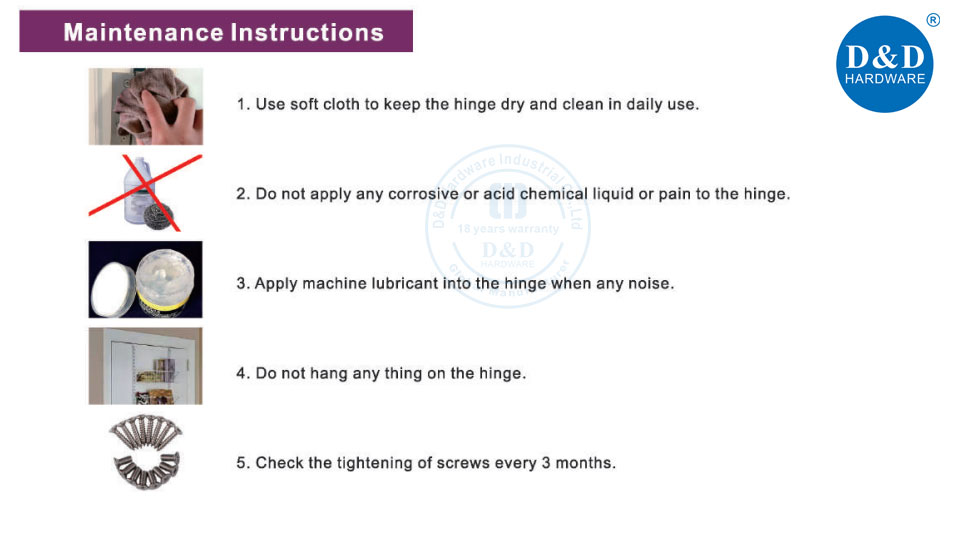
Once door hinges are properly adjusted, regular maintenance helps preserve alignment. Periodically check hinge screws for tightness and inspect for signs of wear. Lubricating hinge pins reduces friction and noise, which in turn reduces stress on screws and mounting surfaces.
In high-traffic environments, scheduled hinge inspections are recommended to prevent gradual misalignment from becoming a larger issue.
Common Mistakes When Adjusting Door Hinges
Several mistakes can compromise hinge adjustment results. Over-tightening screws can strip holes or distort hinges. Making large adjustments all at once can cause new alignment problems. Ignoring hinge condition, such as bent leaves or worn pins, may lead to repeated failures even after adjustment.
Effective hinge adjustment is a balance of precision, patience, and understanding how small changes affect the entire door system.
When Door Hinge Adjustment Is Not Enough
In some cases, hinge adjustment alone cannot resolve the problem. Severely warped doors, damaged frames, or worn-out hinges may require replacement rather than adjustment. Recognizing these limits saves time and ensures long-term reliability.
However, for most common door issues, knowing how to adjust door hinges correctly restores smooth operation quickly and efficiently.
Conclusion
Learning how to adjust door hinges is an essential skill for anyone involved in door installation, maintenance, or property management. Proper adjustment improves door function, extends hardware lifespan, and enhances overall building quality. By understanding hinge behavior, using correct adjustment techniques, and performing regular maintenance, most door alignment problems can be solved without costly replacements.
Please contact us at any time.
David Jian:
Email:sales@danddhardware.com
Tel / WhatsApp / Wechat:+86-139 2903 7292