

A door latch bolt is a fundamental component of everyday door operation, ensuring that a door closes securely while still allowing smooth opening and closing. When a latch bolt fails, doors may not stay shut, may feel stiff to operate, or may require excessive force to close properly. These problems can occur in residential interiors, commercial buildings, hotels, and bathrooms where doors are used frequently.
This article provides a detailed and practical guide on how to fix a door latch bolt, explaining common problems, inspection methods, and repair solutions. Drawing on professional manufacturing experience, D&D Hardware also shares insight into how well-designed door bolt systems and dust-proof sockets can improve overall door reliability and reduce latch-related issues.
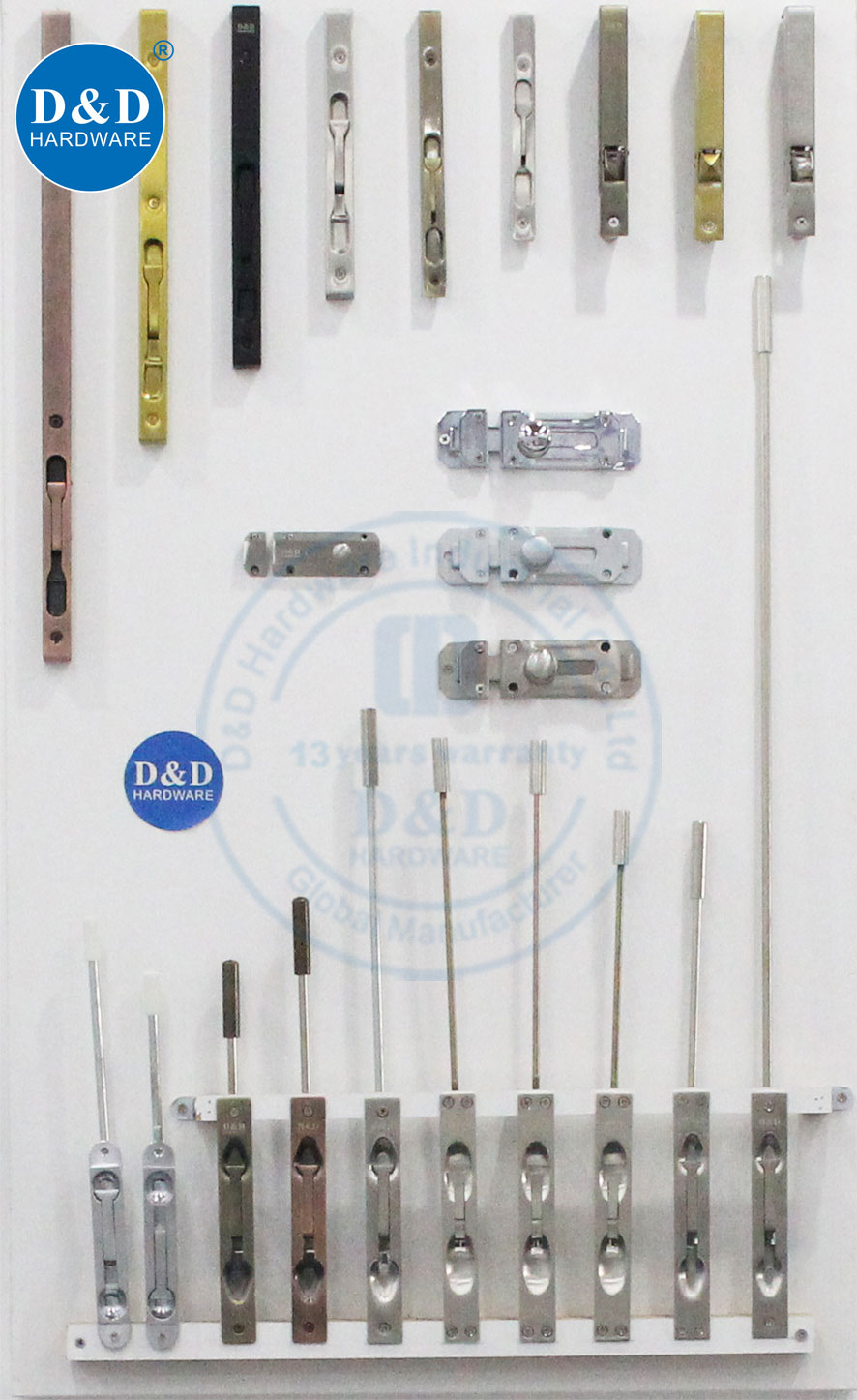
How a Door Latch Bolt Functions in Daily Use
A door latch bolt is a spring-loaded mechanism installed into the edge of a door. When the door closes, the latch extends automatically into a strike plate or receiving socket mounted on the frame, holding the door in place. Turning the handle retracts the latch, allowing the door to open.
In many installations, the latch bolt works together with a Door Bolt or privacy locking component to enhance security and stability. For example, bathroom and internal doors often combine a latch mechanism with a surface-mounted or recessed bolt to ensure both smooth operation and user privacy.
Because latch bolts are constantly in motion, they are exposed to wear, friction, and environmental factors such as dust or humidity, making correct installation and maintenance essential.
Common Problems That Affect Door Latch Bolts
When a door latch bolt stops working correctly, the symptoms are usually easy to notice. Identifying the exact issue helps determine whether adjustment, cleaning, or replacement is required.
Common latch bolt problems include:
-
The latch does not extend fully into the frame
-
The door fails to stay closed unless pushed firmly
-
The latch feels stiff or slow to return
-
The latch rubs against the strike plate or socket
In some cases, the issue is not the latch itself but poor alignment with a Surface Bolt or receiving component, especially on doors that have shifted over time.
Inspecting the Latch Bolt Before Making Repairs
Before attempting any repair, open the door and observe how the latch bolt moves when the handle is operated. The latch should retract smoothly and return instantly when released.
Check that the latch faceplate is flush with the door edge and that all fixing screws are secure. Even slight looseness can affect alignment and prevent proper engagement.
It is equally important to inspect the receiving side. If the latch is intended to align with a dust-proof socket or bolt receiver, confirm that it is centered and free from debris. High-quality components, such as those supplied by D&D Hardware, are manufactured with tight tolerances to reduce alignment issues.
Fixing Alignment Issues Between the Latch and Frame
Misalignment is one of the most common reasons a door latch bolt fails. This can happen due to door sagging, hinge wear, or building movement over time.
In many situations, fixing alignment involves adjusting the strike plate or receiver rather than replacing the latch. Slight repositioning often restores smooth operation without major work.
Where a Barrel Tower Bolt or similar vertical bolt is installed alongside the latch, careful alignment becomes even more important. Poor positioning can cause interference between components, leading to friction or incomplete engagement.
Cleaning and Lubricating a Stiff Latch Bolt
If the latch bolt moves slowly or feels rough, internal contamination may be the cause. Dust, paint, or moisture can build up inside the latch case and restrict movement.
Remove the latch from the door if necessary and clean it using a dry cloth. Avoid excessive liquid cleaners, as they may damage internal springs or attract more debris.
After cleaning, apply a small amount of suitable lubricant to restore smooth motion. Precision-manufactured hardware, such as a Barrel Latch designed for frequent use, typically benefits from occasional lubrication to maintain consistent performance.
Tightening Fixings and Reinforcing Stability
Loose screws are another common cause of latch bolt problems. Repeated use can gradually loosen fixings, allowing the latch case to shift slightly with each operation.
Tighten all mounting screws on the latch, faceplate, and receiving hardware. If the screw holes are worn, reinforcing them may be necessary to restore proper holding strength.
In doors where a Barrel Bolt Lock is also installed for privacy or security, ensuring that both systems are firmly fixed helps prevent movement that could affect latch alignment over time.
When Latch Bolt Replacement Is the Best Solution
Not all latch bolt issues can be repaired. If the internal spring has weakened, the latch tip is damaged, or the mechanism is excessively worn, replacement is often the most effective option.
When replacing a latch bolt, it is important to match the original dimensions and installation method to avoid additional modifications. Selecting a reliable, well-engineered bolt system reduces the likelihood of future failures.
For doors requiring extra stability or privacy, pairing a new latch with a D&D Hardware door bolt and dust-proof socket solution improves durability and overall door performance.
Preventing Future Door Latch Bolt Problems
Long-term latch performance depends largely on correct installation and hardware quality. Accurate alignment during installation minimizes friction and wear from the start.
Using dust-proof sockets helps protect receiving points from debris, which is particularly beneficial in high-use or humid environments. This is one reason D&D Hardware integrates dust-proof solutions into its Surface Bolt and door bolt product range.
Regular inspection and light maintenance help identify minor issues before they become serious problems, extending the service life of both the latch and associated hardware.
Why D&D Hardware Door Bolt Solutions Support Better Latch Performance
Although latch bolts handle daily door operation, complementary hardware such as door bolts and sockets play a key role in alignment, stability, and privacy. D&D Hardware designs its products to work seamlessly together, reducing installation errors and long-term adjustment needs.
Our door bolt and dust-proof socket solutions are manufactured for durability, smooth operation, and consistent performance across residential and commercial applications. Choosing professional-grade hardware ensures that latch systems operate reliably for years.
Conclusion
Fixing a door latch bolt starts with understanding how the mechanism works and identifying the root cause of the problem. Many issues can be resolved through alignment adjustments, cleaning, or tightening, while more severe wear may require replacement.
By combining proper repair techniques with high-quality door hardware from D&D Hardware, doors can achieve smoother operation, secure closure, and longer service life. A correctly functioning latch bolt not only improves usability but also enhances safety and comfort in everyday environments.